Index
- Authority and Scriptures
1.1 The Bible as the only rule of faith and practice
1.2 Human traditions versus the Word of God
1.3 Papal infallibility — truth or deception?
1.4 Oral tradition and apostolic succession
1.5 The role of councils and papal decrees
1.6 The canon of Scripture
1.7 The Apocrypha — should the deuterocanonical books be accepted?
- Mariology and Worship
2.1 Mariology — Marian dogmas and titles in light of the Bible
2.2 The worship of Mary — “queen of heaven”?
2.3 Mary as “co-redemptrix” or mediator
2.4 Mariolatry — devotion or idolatry?
- Sacraments and Mass
3.1 Sacraments and the Eucharist — the confusion between symbol and reality
3.2 The Mass as a continuous sacrifice — a denial of the finished work of Christ
3.3 The transubstantiation of the Eucharist — a symbol transformed into dogma
- Purgatory and Indulgences
4.1 Purgatory — an invention without biblical basis
4.2 Penances and indulgences — the commerce of faith
Confession and Celibacy
- Confession and Celibacy
5.1 Auricular confession — necessary or unbiblical?
5.2 Mandatory priestly celibacy — a command from God or a human imposition?
- Images, Saints, and Practices
6.1 The idolatry of images — the danger of the visible
6.2 The worship of saints and relics — mediators or superstition?
6.3 Canonization and the intercession of saints — a biblical analysis
6.4 Prayers and masses for the dead — human tradition or biblical teaching?
6.5 The Rosary and mechanical repetitions — prayer or vain repetition?
6.6 Relics, pilgrimages, and popular superstitions
- Other Points
7.1 The danger of a centralized clerical hierarchy
7.2 The Catholic Magisterium and the sufficiency of the cross
7.3 Ecumenism and religious relativism
- Practical Errors of Catholicism in Light of the Bible
8.1 Infant baptism versus biblical baptism
8.2 Mary as “comforter” versus the Holy Spirit
8.3 Justification by works versus justification by faith
8.4 Adoration of the host — idolatry disguised as devotion
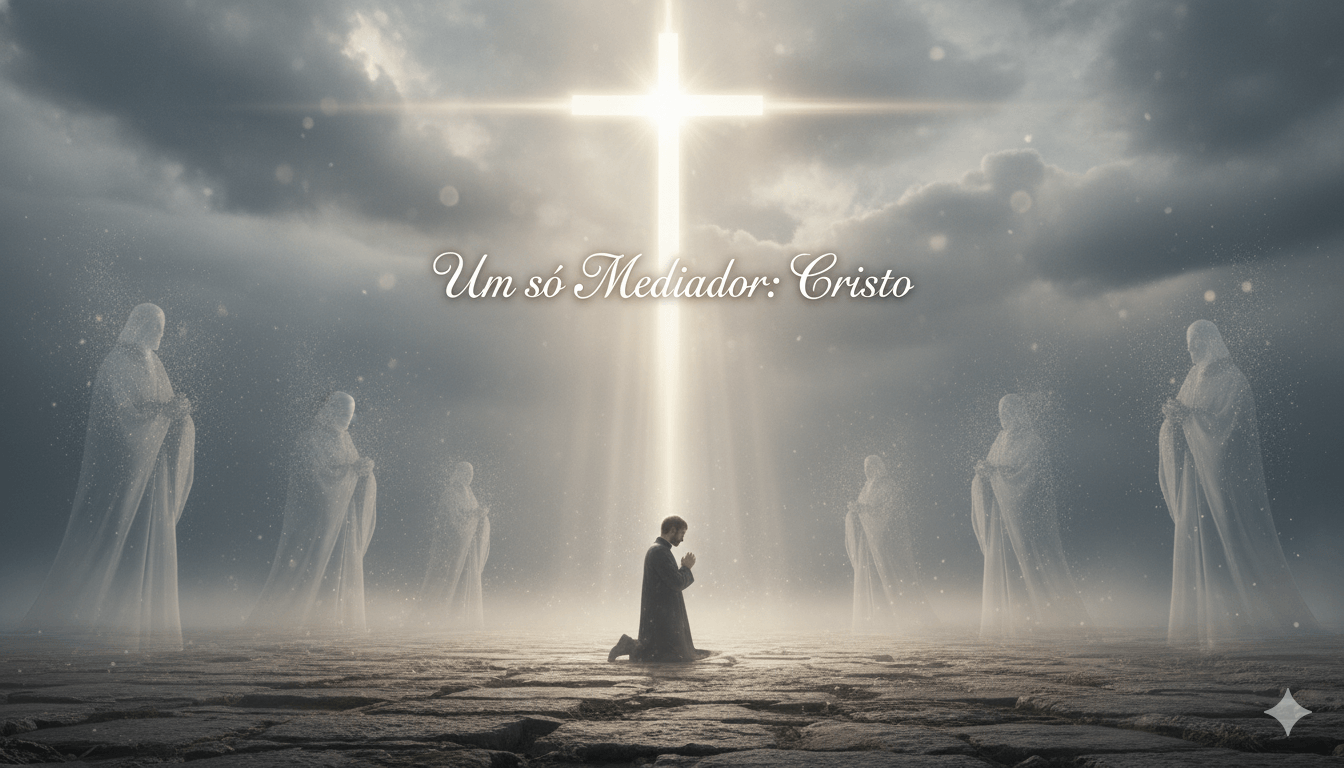
8.5 Human mediators versus direct access to the Father
Introduction
Millions of sincere Catholics, especially those involved in the Catholic Charismatic Renewal (CCR), seek a deeper and more personal experience with God. Driven by a genuine desire to draw closer to Jesus and live in the power of the Holy Spirit, they participate in prayer groups, sing praises, and witness transformations in their lives. We see and respect this sincere search, for it reflects the longing that God Himself has placed in the human heart.
It is in this spirit of love and respect that we offer this study. It is not a hostile criticism, but a loving invitation to examine together, with open hearts, the foundations upon which this journey of faith is being built. The question that guides us is: is the charismatic experience, so valued in the CCR, aligned with the unshakeable foundation of God’s Word, or does it rest on traditions and doctrines that, although ancient, may lead us astray from the simple and direct path that Jesus revealed to us?
Our goal is to walk alongside you, our Catholic friend, through the Scriptures, comparing important teachings about the authority of the Bible, the role of Mary, salvation, the sacraments, and access to God. We do this not to tear down faith, but to build it up on the only rock that never fails: Jesus Christ and His Word. We believe that, in doing so, we will together find the freedom and security that are only found in Christ.
“Sanctify them in the truth; your word is truth.” (John 17:17)

1. Authority and Scriptures
1.1 The Bible as the sole rule of faith and practice
One of the central points of difference between biblical Christianity and Roman Catholicism is the final source of authority. For the Christian faithful to the Scriptures, the Bible alone is the infallible rule of faith and practice.
The Catholic Church, however, places “Tradition” and the “Magisterium” on equal footing with the written Word. The Catholic Catechism states:
“Sacred Tradition and Sacred Scripture, then, are bound closely together and communicate one with the other. For both of them, flowing out from the same divine well-spring, come together in some fashion to form one thing and move towards the same goal.” (Catechism of the Catholic Church, §80).
In practice, this means that dogmas can be created without a biblical basis, as long as they are in accordance with tradition or proclaimed by the pope or councils.
However, the Bible clearly teaches its own sufficiency:
“All Scripture is breathed out by God and profitable for teaching, for reproof, for correction, and for training in righteousness, that the man of God may be complete, equipped for every good work.” (2 Timothy 3:16-17)
There is no indication that human traditions or ecclesiastical authorities can carry the same weight as the inspired Word. On the contrary, Jesus warned the religious leaders of His time:
“‘This people honors me with their lips, but their heart is far from me; in vain do they worship me, teaching as doctrines the commandments of men.’” (Matthew 15:8-9)
Thus, any practice or doctrine not firmly based on the Scriptures must be rejected. True faith is not supported by human inventions, but by divine revelation.


1.2 Human traditions versus the Word of God
Jesus condemned those who elevated human traditions to the same level as the Word of God. The Pharisees were masters at creating additional commandments, thereby nullifying the essence of the Law.
The same occurs when a church or religious institution places its traditions above the Scriptures. Throughout history, the Roman Catholic Church has added practices that do not originate from the Word of God but from human decisions—such as purgatory, indulgences, and the worship of Mary and the saints.
The Lord warned:
“So for the sake of your tradition you have made void the word of God.” (Matthew 15:6)
And He declared again:
“You have a fine way of rejecting the commandment of God in order to establish your tradition!” (Mark 7:9)
Therefore, the true Christian must choose between following the Word of God and following human traditions. It is not possible to serve two masters.

1.3 Papal infallibility — truth or deception?
The dogma of papal infallibility was proclaimed at the First Vatican Council in 1870. It teaches that when the pope speaks “ex cathedra” on matters of faith and morals, he is incapable of error.
However, the Bible states that only God is infallible:
“Let God be true though every one were a liar.” (Romans 3:4)
All men, including religious leaders, are fallible:
“for all have sinned and fall short of the glory of God.” (Romans 3:23)
Not even Peter, considered by the Catholic Church to be the first pope, was free from error. He denied Jesus three times (Matthew 26:69-75) and was publicly rebuked by Paul in Antioch because he was not acting in line with the truth of the gospel (Galatians 2:11-14).
The dogma of papal infallibility usurps the exclusive position of Christ as the sole head of the Church:
“And he is the head of the body, the church. He is the beginning, the firstborn from the dead, that in everything he might be preeminent.” (Colossians 1:18)
Therefore, the doctrine of papal infallibility finds no basis in the Scriptures and must be rejected as a human addition that distorts the truth.

1.4 Oral tradition and apostolic succession: do they have a biblical basis?
It is true that the apostles transmitted the gospel message orally before it was recorded. But, already in the first century, this preaching was progressively put into writing in the Gospels, apostolic letters, and other inspired books. God’s purpose was to leave a permanent and unchangeable record. Thus, oral tradition should not be seen as a parallel and independent source from the Bible, but as the initial means by which the message was delivered until it was recorded.
Paul warned against human traditions that attempt to establish themselves as spiritual authority:
“See to it that no one takes you captive by philosophy and empty deceit, according to human tradition, according to the elemental spirits of the world, and not according to Christ.” (Colossians 2:8)
Catholic apostolic succession claims that the authority of Peter and the apostles was continuously transmitted to the bishops and the pope. However, the Bible does not support this. Apostolic authority was directly linked to a personal call from Christ and to being an eyewitness of the resurrection (Acts 1:21–22). The apostles had a unique and unrepeatable mission in the history of the church: to lay the foundation (Ephesians 2:20).
After them, we see no biblical command for that office to be perpetuated. On the contrary, the church was to remain faithful to the teaching of the apostles recorded in the Scriptures (Acts 2:42).
True apostolic succession is not in a lineage of bishops or popes, but in faithfulness to the gospel announced by the apostles and preserved in the Scriptures.
“I warn everyone who hears the words of the prophecy of this book: if anyone adds to them, God will add to him the plagues described in this book, and if anyone takes away from the words of the book of this prophecy, God will take away his share in the tree of life and in the holy city, which are described in this book.” (Revelation 22:18–19)

1.5 The role of councils and papal decrees: human or divine authority?
Throughout history, the Roman Catholic Church consolidated itself not only as a religious institution but also as a political and social power. One of the ways this authority was exercised was through ecumenical councils and papal decrees, considered by the church itself as channels of infallible revelation and guidance.
From the Middle Ages onward, papal decrees (bulls) gained the force of spiritual and civil law, often even superseding the Scriptures. Dogmas such as transubstantiation, the Immaculate Conception, and the Assumption of Mary were established not by the Word of God, but by conciliar decisions or papal pronouncements.
However, the Bible never grants men the right to create new dogmas or spiritual truths. The apostle Peter, considered the first pope, left very different instructions:
“So I exhort the elders among you, as a fellow elder and a witness of the sufferings of Christ, as well as a partaker in the glory that is going to be revealed: shepherd the flock of God that is among you, exercising oversight, not under compulsion, but willingly, as God would have you; not for shameful gain, but eagerly; not domineering over those in your charge, but being examples to the flock.” (1 Peter 5:1-3)
By elevating human decrees to the level of divine revelation, the Catholic Church falls into the error condemned by the Scriptures:
“Do not add to his words, lest he rebuke you and you be found a liar.” (Proverbs 30:6)
Therefore, the final authority does not reside in councils or papal decrees, but solely in the Word of God.

1.6 The canon of Scripture: who really defined the Bible?
The canon of Scripture was not created by the Church but recognized by the community of faith throughout history, based on the divine inspiration of the writings. The Catholic Church, on the other hand, claims that it was its authority that defined the Bible, also adding apocryphal books that were not accepted by the Jews nor recognized by Jesus and the apostles.
The truth is that the Word of God does not depend on the validation of a human institution to be legitimate. Later councils simply recognized what God had already inspired.
The Bible warns against any attempt to add to or take away from revelation:
“Do not add to his words, lest he rebuke you and you be found a liar.” (Proverbs 30:6)
And Paul reinforces the gravity of adulterating the gospel:
“But even if we or an angel from heaven should preach to you a gospel contrary to the one we preached to you, let him be accursed.” (Galatians 1:8)
Thus, the biblical canon is the fruit of God’s inspiration and not of human authority.

1.7 The Apocrypha: should the deuterocanonical books be accepted?
The apocryphal books, also called deuterocanonical, were officially accepted by the Catholic Church at the Council of Trent (1546), in response to the Protestant Reformation. However, these writings were never part of the Hebrew canon and were not recognized by Jesus or the apostles as inspired Scripture.
Although they contain historical and literary value, they present doctrinal errors and contradictions that distinguish them from the inspired books. Furthermore, at no point in the New Testament are these books quoted as the Word of God.
Therefore, their inclusion as Scripture by the Catholic Church reflects more of an institutional decision than a recognition of divine inspiration.
The true Christian must base their faith solely on what God has inspired.
“So for the sake of your tradition you have made void the word of God.” (Matthew 15:6)
2. Mariology and Worship
2.1 Mariology: Marian dogmas and titles in light of the Bible
One of the greatest obstacles of Roman Catholicism—and one that the Catholic Charismatic Renewal does not reject—is the exaggerated and unbiblical devotion to Mary. The Catholic Church teaches and promotes dogmas such as:
- The Immaculate Conception (Mary was supposedly born without original sin).
- The Assumption of Mary (she was supposedly taken up, body and soul, into heaven).
- Mary as “Mediatrix of all graces” and “Co-Redemptrix.”
- The practice of praying the Rosary and directing prayers directly to Mary.
The CCR, while emphasizing the Holy Spirit, remains deeply Marian. Its meetings and masses include prayers to Mary, Marian consecrations, and the famous motto: “To Jesus through Mary.” This, however, is entirely contrary to the Scriptures.
The Bible declares that there is only one mediator between God and men:
“For there is one God, and there is one mediator between God and men, the man Christ Jesus.” (1 Timothy 2:5)
By attributing to Mary roles of intercessor, mediatrix, and even co-redemptrix, Catholicism is, in practice, stealing the exclusive glory of Christ. As much as Catholics claim that Mary does not replace Jesus, in devotional practice she assumes a central place that should belong only to Christ.
Furthermore, the Bible never describes Mary as someone without sin. On the contrary, she herself acknowledges her need for salvation:
“and my spirit rejoices in God my Savior.” (Luke 1:47)
If Mary needed a Savior, it is because she was a sinner like all of us. The worship and prayers to Mary are not only useless but are a dangerous deviation that violates the first commandment:
“You shall have no other gods before me.” (Exodus 20:3)
Jesus is sufficient. His intercession is perfect, His sacrifice is complete, His work is final. True faith looks only to Him.
Therefore, the Mariology of the CCR, instead of bringing the faithful closer to Christ, creates a spiritual barrier that distances them from the sufficiency of the Savior.

2.2 The worship of Mary: “queen of heaven”?
One of the most controversial practices is the worship rendered to Mary. The Catholic Church teaches that she is the “mother of God,” “mediatrix,” “queen of heaven,” and even “co-redemptrix.” In practice, this means that millions of Catholics pray to Mary, ask for her intercession, and venerate her in processions and festivals.
The CCR maintains this devotion, albeit in a more modern tone. Marian songs, consecrations, and Rosary prayers continue to be strongly promoted.
But the Bible never presents Mary as an object of worship. On the contrary, when someone tried to exalt her more than was due, Jesus replied:
“‘Blessed rather are those who hear the word of God and keep it!’” (Luke 11:28)
Mary was a faithful servant, an example of obedience and faith. However, she herself recognized that she needed a Savior:
“and my spirit rejoices in God my Savior.” (Luke 1:47)
The title “queen of heaven” given to Mary is identical to the name of a pagan deity condemned in Jeremiah 7:18 and Jeremiah 44:17–19. Replacing Christ with Mary as a mediator is a serious distortion of the gospel, for the Word declares:
“For there is one God, and there is one mediator between God and men, the man Christ Jesus.” (1 Timothy 2:5)

2.3 Mary as “co-redemptrix” or mediatrix
One of the most dangerous teachings promoted by the Catholic Church is that of Mary as “co-redemptrix.” This title suggests that the work of salvation was not accomplished by Christ alone, but that Mary also cooperated in an essential way. In some papal statements, Mary is even called the “mediatrix of all graces.”
This concept is entirely contrary to the Scriptures. The Bible states:
“For there is one God, and there is one mediator between God and men, the man Christ Jesus.” (1 Timothy 2:5)
Christ is the only one capable of reconciling us with the Father. Adding Mary to this process is to diminish the perfect work of the cross and create a spiritual idol.
The Catholic devotion to Mary as co-redemptrix leads millions to trust in someone who cannot save. Mary was a faithful servant, but she is not a mediatrix, savior, or redemptrix. The glory of salvation belongs to Christ alone.

2.4 Mariolatry: devotion or idolatry?
Mariolatry is the exaggerated form of worship of Mary, which places her at the center of Catholic spirituality. Processions, Rosary prayers, Marian consecrations, and titles like “lady of the church” or “queen of heaven” transform her into an object of adoration.
However, the Bible clearly forbids idolatry:
“You shall not make for yourself a carved image, or any likeness of anything that is in heaven above, or that is in the earth beneath, or that is in the water under the earth. You shall not bow down to them or serve them.” (Exodus 20:4-5)
Mariolatry, though disguised as “veneration,” occupies the place that belongs only to God. It replaces the worship of the Creator with devotion to a creature.
True biblical faith does not share the glory of Christ with anyone. He is sufficient, perfect, and exclusive as Savior and Lord.
3. Sacraments and Mass
3.1 Sacraments and the Eucharist: the confusion between symbol and reality
Catholicism teaches that the sacraments—baptism, Eucharist, confession, confirmation, marriage, holy orders, and anointing of the sick—are indispensable channels of grace for salvation. This teaching places salvation not as a fruit of faith in Christ, but as dependent on rituals controlled by the Church.
The Scripture, however, teaches the opposite:
“For by grace you have been saved through faith. And this is not your own doing; it is the gift of God, not a result of works, so that no one may boast.” (Ephesians 2:8-9)
No ritual can guarantee salvation. Baptism is a public testimony of faith, not regeneration in itself (Acts 2:38; Romans 6:4). The Lord’s Supper is a remembrance and proclamation of Christ’s death (1 Corinthians 11:23-26), not a repeated sacrifice. Biblical confession is made directly to God (1 John 1:9), not to a human priest.
By making the sacraments mandatory, the Catholic Church binds the faithful to an institutional dependency, overshadowing the sufficiency of Jesus’ sacrifice. This creates the false impression that grace is distributed by the Church, when, in reality, it comes from Christ alone.

3.2 The Mass as a continuous sacrifice: a denial of the finished work of Christ
The Catholic Church teaches that the Mass is the unbloody renewal of Christ’s sacrifice. In other words, Christ is supposedly offered repeatedly in every celebration of the Eucharist.
But the Bible is categorical: Christ’s sacrifice was unique, perfect, and sufficient.
“But when Christ had offered for all time a single sacrifice for sins, he sat down at the right hand of God.” (Hebrews 10:12)
Christ is not offered daily. His work was finished on the cross. The repetition of the Mass suggests that the sacrifice was not complete, but the Scripture declares:
“It is finished.” (John 19:30)
Therefore, the practice of the Mass as a continuous sacrifice directly contradicts the gospel.
3.3 The transubstantiation of the Eucharist: a symbol transformed into dogma
The Catholic doctrine of transubstantiation claims that the bread and wine are transformed into the actual body and blood of Christ during the Mass, although they retain the appearance of bread and wine.
This teaching finds no clear basis in Scripture. Jesus said:
“This is my body… This cup is the new covenant in my blood.” (Luke 22:19-20)
But the context shows that He was speaking symbolically, pointing to His death. Christ Himself stated:
“The words that I have spoken to you are spirit and life.” (John 6:63)
The Lord’s Supper is a living memorial, not a repetition of the sacrifice. Paul confirms:
“Do this in remembrance of me.” (1 Corinthians 11:24)
The problem with transubstantiation is that it transforms a symbol into a dogma, leading millions to believe they are literally consuming Christ, when in fact they are celebrating in remembrance of the work already accomplished.

4. Purgatory and Indulgences
4.1 Purgatory: an invention without biblical basis
The Bible declares that after death comes judgment:
“And just as it is appointed for man to die once, and after that comes judgment.” (Hebrews 9:27)
There is no second chance, nor a place of temporary purification. The eternal destiny is defined in this life, according to faith in Christ.
Jesus told the parable of the rich man and Lazarus (Luke 16:19-31). In it, it is clear that after death, each person goes to their eternal destiny, with no possibility of crossing from one side to the other. The chasm is fixed.
Purgatory is a human invention that diminishes the power of the cross. Christ has already fully paid the price:
“For by a single offering he has perfected for all time those who are being sanctified.” (Hebrews 10:14)
Praying for the dead, therefore, is useless and deceptive. The biblical call is to pray for the living, that they may know the truth and be saved.
4.2 Penances and indulgences: the commerce of faith
One of the darkest chapters in the history of the Church is the practice of indulgences. In Roman Catholicism, an indulgence is defined as the remission before God of the temporal punishment due to sins whose guilt has already been forgiven. In practice, this translated into a system where salvation seemed to be purchasable, either with money or with works or repetitive rituals.
In the Middle Ages, this system reached the point of becoming a true economy of faith. Preachers traveled through cities announcing that by giving a certain amount, a person or even their deceased relatives could have their pains in purgatory alleviated. The famous slogan of Johann Tetzel summarized this mentality: “As soon as the coin in the coffer rings, the soul from purgatory springs.”
The Word of God, however, is clear:
“For by grace you have been saved through faith. And this is not your own doing; it is the gift of God, not a result of works, so that no one may boast.” (Ephesians 2:8-9)
There is no room for buying forgiveness. The price of redemption has already been paid, once for all, on the cross:
“It is finished!” (John 19:30)
It was precisely the sale of indulgences that led Martin Luther to write his 95 Theses in 1517. He could not bear to see the people deceived, buying sealed papers as if they were passports to heaven. The Protestant Reformation echoed the truth that had been silenced: salvation is by faith alone (sola fide), by grace alone (sola gratia), in Christ alone (solus Christus).
This teaching must be firmly rejected. No coin, mechanical prayer, or promise can hasten forgiveness or shorten pains in the afterlife. Forgiveness is complete and free for those who believe. The gospel is not for sale.

5. Confession and Celibacy
5.1 Auricular confession: necessary or unbiblical?
The Catholic Church teaches that the faithful must confess their sins to a priest to receive absolution. However, the Bible teaches that only God can forgive sins, and access to Him was opened by Christ on the cross.
“If we confess our sins, he is faithful and just to forgive us our sins and to cleanse us from all unrighteousness.” (1 John 1:9)
Confession should be made directly to God, in sincere prayer, and not to a man who is also a sinner.
Furthermore, the only mediator between God and men is Jesus Christ:
“For there is one God, and there is one mediator between God and men, the man Christ Jesus.” (1 Timothy 2:5)
The practice of auricular confession transfers to a priest a function that Christ did not delegate. Pastors and brothers can pray together and offer counsel (James 5:16), but forgiveness is granted by God alone.

5.2 Mandatory priestly celibacy: a command from God or a human imposition?
Another Catholic practice is the mandatory celibacy for priests. Although the Bible values the gift of celibacy (1 Corinthians 7:7-8), it never imposes it as a rule for all spiritual leaders.
In fact, the biblical requirements for bishops and elders include marriage and the good management of a family:
“Therefore an overseer must be above reproach, the husband of one wife, sober-minded, self-controlled, respectable, hospitable, able to teach.” (1 Timothy 3:2)
“if anyone is above reproach, the husband of one wife, and his children are believers and not open to the charge of debauchery or insubordination.” (Titus 1:6)
The imposition of celibacy has generated many scandals throughout history, as it places a burden on religious leaders that God never commanded. Marriage is honorable and part of the divine plan to avoid temptation and promote holiness:
“Let marriage be held in honor among all, and let the marriage bed be undefiled, for God will judge the sexually immoral and adulterous.” (Hebrews 13:4)
Therefore, making celibacy a mandatory requirement is not a command from God, but a human tradition, often with destructive consequences.

6. Images, Saints, and Practices
6.1 The idolatry of images: the danger of the visible
The argument that images are just “reminders” does not hold up against popular practice: people kneel, make vows, and touch the images as if they were sacred. In the Old Testament, whenever Israel introduced images into their worship, they fell into idolatry (2 Kings 17:12; Jeremiah 10:3-5).
Christ is the only visible image of God (Colossians 1:15). The use of images obscures the centrality of faith in Christ and replaces worship in spirit and truth (John 4:24) with visual and material practices.
6.2 The worship of saints and relics: mediators or superstition?
Catholicism also promotes prayers to saints and the veneration of relics (bones, clothes, objects supposedly linked to martyrs). This practice finds no biblical support.
The Word teaches that deceased believers await the resurrection (Hebrews 9:27; 1 Thessalonians 4:16) and do not intercede for the living. Invoking the dead is spiritism, something condemned by God (Leviticus 19:31).
Relics also become objects of superstition. Salvation and miracles come from the power of God, not from physical objects (Acts 4:12). The worship of saints replaces direct faith in Christ with human intermediaries.

6.3 Canonization and the intercession of saints: a biblical analysis
Another central doctrine of Catholicism is the canonization of men and women, officially declaring them “saints” and authorizing their veneration. The problem begins with the definition itself: the Bible states that all believers in Christ are saints (1 Corinthians 1:2; Ephesians 1:1), as they were set apart by the blood of Jesus, not by their own merit.
The process of canonization has no biblical basis and has created a spiritual elite within the Catholic Church, promoting devotion to intermediaries. But the Scripture is clear: “For there is one God, and there is one mediator between God and men, the man Christ Jesus” (1 Timothy 2:5). No saint can take the place of Christ as intercessor.
6.4 Prayers and masses for the dead: human tradition or biblical teaching?
The Bible states that after death, each person faces eternal judgment, with no possibility of change by what the living do (Hebrews 9:27; John 19:30).
Masses for the dead open the door for financial exploitation and emotional manipulation of the bereaved. Such a practice lacks biblical foundation and diminishes the finished work of Christ.
6.5 The Rosary and mechanical repetitions: prayer or vain repetition?
The Rosary is one of the most widespread practices in Roman Catholicism. It consists of repetitive prayers (Hail Marys, Our Fathers, and creeds), counted on the beads of a necklace, as if the quantity were a means to gain divine favor.
However, Jesus clearly warned:
“And when you pray, do not heap up empty phrases as the Gentiles do, for they think that they will be heard for their many words.” (Matthew 6:7)
Biblical prayer is a sincere dialogue with God, based on faith and relationship, not on mechanical formulas. The Rosary, besides being idolatrous due to its focus on Mary, is contrary to the simplicity of prayer taught by Christ.
6.6 Relics, pilgrimages, and popular superstitions
Roman Catholicism also relies on practices such as the veneration of relics (bones, clothes, objects), pilgrimages to places considered sacred, and popular rituals that border on superstition. Thousands travel to shrines believing that there they will find greater closeness to God or receive special miracles.
However, the Word teaches that God does not dwell in temples made by human hands (Acts 17:24). True worship is spiritual, performed wherever two or three are gathered in the name of Christ (Matthew 18:20).
Placing faith in relics, places, or objects is superstition and diverts the trust that should be placed solely in Jesus.
7.1 The danger of a centralized clerical hierarchy
One of the most marked features of Catholicism is the concentration of religious power in a highly centralized hierarchical structure. The pope, cardinals, bishops, and priests form a system where authority is vertical, and the faithful depend on this mediation to access the sacraments, receive blessings, and, in many cases, even to interpret the Word of God. This view directly contrasts with the biblical teaching that all believers have free access to God through Christ.
- The Universal Priesthood of Believers
The Bible teaches that all who are in Christ have direct access to the Father, without the need for human intermediaries:
“But you are a chosen race, a royal priesthood, a holy nation, a people for his own possession…” (1 Peter 2:9)
There are no spiritual classes closer to God; every Christian is called to serve, preach, and intercede.
- Centralization that Corrupts
Throughout history, the concentration of authority in the clerical hierarchy has opened the door for abuse, corruption, and manipulation. The sale of indulgences, the imposition of dogmas without biblical basis, and the use of religious power for political ends are examples of how this model can distort the gospel.
- Christ as the Head of the Church
The Scripture affirms that Christ is the only head of the Church:
“And he is the head of the body, the church. He is the beginning, the firstborn from the dead, that in everything he might be preeminent.” (Colossians 1:18)
When human authority takes this place, it replaces the centrality of Jesus and creates dependence on an institution instead of dependence on Christ.
- The New Testament Community
In the apostolic letters, we see local leaders (elders, deacons) serving the communities, but always in a servant capacity, not one of domination. Jesus warned His disciples:
“You know that the rulers of the Gentiles lord it over them, and their great ones exercise authority over them. It shall not be so among you. But whoever would be great among you must be your servant.” (Matthew 20:25-26)
7.2 The Catholic Magisterium and the sufficiency of the cross
The Magisterium of the Catholic Church—that is, the teaching function exercised by the pope and the bishops in communion with him—is considered by Catholics to be an infallible authority in the interpretation of the Bible. In practice, this means that the Word of God cannot be fully understood without the mediation of the institution and its accumulated tradition.
This concept undermines the sufficiency of the cross and the clarity of the Scriptures. The Word declares that salvation and the revelation of God in Christ are sufficient and accessible to all who believe.
“The law of the LORD is perfect, reviving the soul; the testimony of the LORD is sure, making wise the simple.” (Psalm 19:7)
“All Scripture is breathed out by God and profitable for teaching, for reproof, for correction, and for training in righteousness, that the man of God may be complete, equipped for every good work.” (2 Timothy 3:16-17)
By asserting that only the Magisterium can legitimately interpret the Bible, the Catholic Church places a barrier between the people and the Word. This creates dependence on a religious elite and obscures the clear truth of the Scriptures.
The sufficiency of the cross guarantees that we do not need human mediators to know salvation. Faith in Christ is the only requirement:
“Therefore, since we have been justified by faith, we have peace with God through our Lord Jesus Christ.” (Romans 5:1)
Therefore, the Catholic Magisterium usurps a function that belongs solely to the inspired Scripture and the finished work of Christ.
7.3 Ecumenism and religious relativism
Ecumenism is the movement that seeks the union of all Christian churches—and, in many cases, even all religions—in the name of peace and brotherhood. Although the idea seems noble, it carries a great danger: the relativism of truth.
The Catholic Church has been one of the main promoters of this movement, actively participating in interreligious meetings where all beliefs are treated as equally valid. In such contexts, Christ ceases to be proclaimed as the only way of salvation and becomes just one more option among many.
The Scripture, however, is categorical:
“I am the way, and the truth, and the life. No one comes to the Father except through me.” (John 14:6)
The apostle Peter declared before the authorities:
“And there is salvation in no one else, for there is no other name under heaven given among men by which we must be saved.” (Acts 4:12)
Therefore, any movement that dilutes the exclusivity of Christ in the name of a supposed spiritual unity must be rejected. True biblical unity is not built on concessions to the truth, but on the confession that Jesus Christ is Lord.

8. Practical Errors of Catholicism in Light of the Bible
8.1 Infant baptism versus biblical baptism
Catholicism teaches that the baptism of infants washes away original sin and makes the person a part of the Church. But the Bible always shows baptism as a conscious response of faith and repentance.
“And Peter said to them, ‘Repent and be baptized every one of you in the name of Jesus Christ for the forgiveness of your sins…’” (Acts 2:38)
“And they said, ‘Believe in the Lord Jesus, and you will be saved, you and your household.’” (Acts 16:31)
Infant baptism has no biblical basis, as an infant cannot believe or repent. True baptism is the fruit of personal faith.

8.2 Mary as “comforter” versus the Holy Spirit
In Catholicism, Mary is often invoked as advocate, helper, and comforter. However, Jesus promised that the true Comforter would be the Holy Spirit.
“And I will ask the Father, and he will give you another Helper, to be with you forever, even the Spirit of truth.” (John 14:16-17)
“But the Helper, the Holy Spirit, whom the Father will send in my name, he will teach you all things…” (John 14:26)
To replace the Holy Spirit with Mary in this role is to dishonor the promise of Christ and to put a creature in the place of God Himself.

8.3 Justification by works versus justification by faith
Catholicism teaches that salvation is achieved through faith plus works and the sacraments. But the Bible is clear: we are justified by faith in Christ alone.
“For we hold that one is justified by faith apart from works of the law.” (Romans 3:28)
“For by grace you have been saved through faith. And this is not your own doing; it is the gift of God, not a result of works, so that no one may boast.” (Ephesians 2:8-9)
By adding works as a requirement for salvation, Catholicism nullifies the sufficiency of the cross.
8.4 Adoration of the host: idolatry disguised as devotion
In Catholicism, the consecrated host is adored as if it were the very body of Christ, even in processions like Corpus Christi. However, the Bible forbids the worship of anything created:
“‘You shall worship the Lord your God and him only shall you serve.’” (Matthew 4:10)
Adoring the host is a deviation from true worship, which must be directed only to God in spirit and in truth.
8.5 Human mediators versus direct access to the Father
In Catholicism, priests, saints, and Mary are seen as mediators to reach God. But the Bible guarantees that we have direct access to the throne of grace, through Christ.
“Let us then with confidence draw near to the throne of grace, that we may receive mercy and find grace to help in time of need.” (Hebrews 4:16)
Placing human mediators between God and the faithful is to deny the perfect work of Christ as our High Priest.
Conclusion
As we reach the end of this journey, our heart and prayer is that this study has been received in the same spirit of love with which it was written. Our intention was never to attack or diminish anyone’s sincere faith, but rather, together, to place all our beliefs under the loving and clear light of God’s Word.
We have seen that, on many points, traditions can lead us down paths that diverge from the simplicity of the Gospel. The final call, therefore, is not one of condemnation, but of discovery. It is an invitation to find full rest, security, and joy in the finished work of Jesus. He is our direct access to the Father, our only Mediator, and His Word is our sure compass.
May we all place our complete trust in Him, the author and finisher of our faith.